
























The global construction industry is at a pivotal crossroads. Faced with immense pressure from labor shortages, tightening deadlines, shrinking budgets, and an urgent call for sustainable practices, the traditional “stick-built” construction model is struggling to keep pace. For centuries, building has been a linear, on-site, and weather-dependent process, often resulting in costly delays and material waste.
This is where enters the scene. This is not merely a passing trend; it is a fundamental and transformative shift in how we design, build, and deploy structures. From a durable prefab house and strong light steel houses to rapidly deployable containers houses, this method is the solution. As a process that moves the majority of construction activity from a chaotic outdoor site to a controlled indoor factory, modular manufacturing is redefining the very metrics of efficiency, quality, and speed.
In this comprehensive guide, we will explore the transformative power of this off-site method, dissect its core advantages over traditional techniques, and illustrate how Pramo Prefabricated is leveraging modular manufacturing principles to deliver next-generation building solutions today.

What Exactly Is Modular Manufacturing?
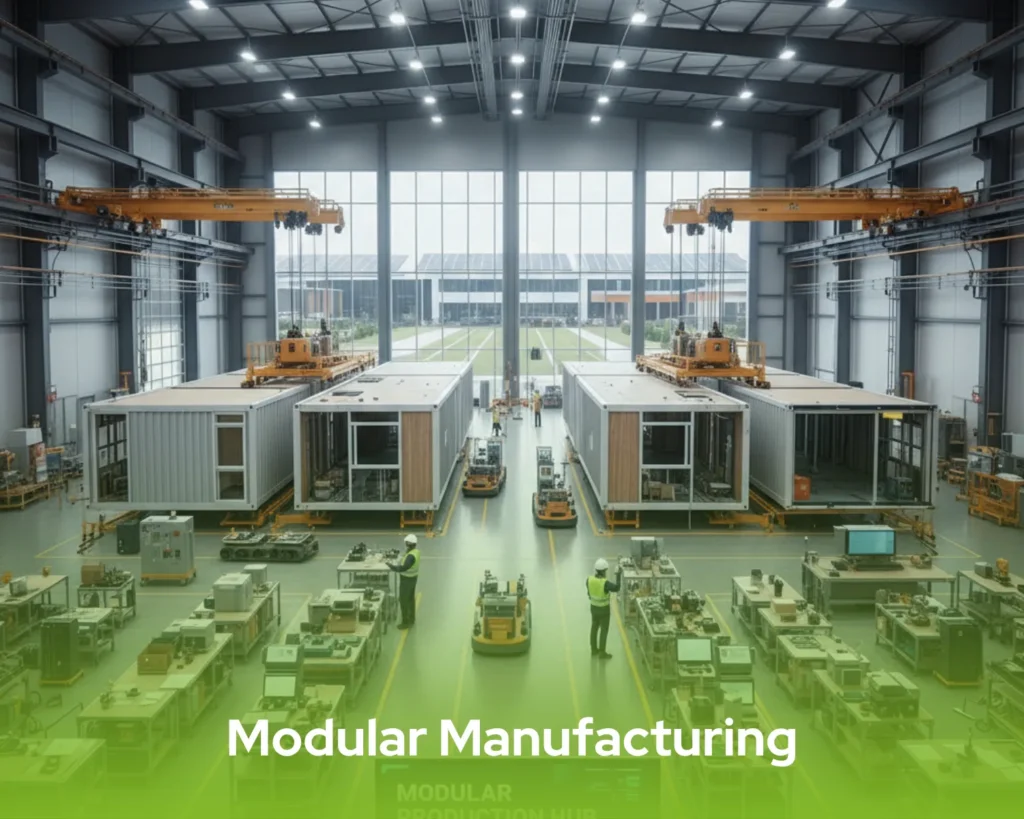
At its core, modular manufacturing (often used interchangeably with “volumetric construction” or “off-site construction”) is a process where a building is constructed off-site, under controlled factory conditions. This process involves creating complete, three-dimensional sections of a building, known as “modules.”
These modules are not just empty frames. They are often manufactured to be 80-90% complete before they ever leave the factory. This can include pre-installed plumbing, electrical wiring, interior finishes like flooring and cabinetry, and even fixtures.
Once these modules are completed and have passed rigorous quality inspections, they are securely transported to the construction site. There, they are set onto the pre-prepared foundation by cranes and seamlessly joined together to form a complete building. This off-site process, which is detailed in concepts like Modular building on Wikipedia, moves construction from a manufacturing and assembly challenge to a logistics and assembly operation.
The key differentiator of modular manufacturing is its parallel workflow. In traditional construction, work is sequential: you cannot build walls until the foundation is cured. With the modular method, site preparation and foundation work happen at the same time as the building’s modules are being fabricated in the factory. This simultaneous action is what drastically compresses project timelines.
The Unbeatable Advantages of Modular Manufacturing
The rapid adoption of this method isn’t accidental. It offers a powerful combination of benefits that address the primary pain points of the modern construction industry.
1. Accelerated Project Timelines and Faster ROI
Time is the most valuable commodity in construction. The parallel workflow of modular manufacturing can reduce project timelines by as much as 30% to 50%. While the on-site team prepares the foundation, a dedicated factory team is building the structure. Furthermore, factory production is immune to weather delays—rain, snow, or extreme heat cannot stop progress. This acceleration means buildings are occupied sooner, allowing clients (especially in commercial, retail, or housing sectors) to begin generating revenue far more quickly.
2. Superior Quality Control and Consistency
A factory is an optimized environment for quality; a traditional building site is not. The modular manufacturing process brings the precision of assembly-line techniques to construction.
- Controlled Environment: Materials are protected from moisture, theft, and environmental damage.
- Skilled Workforce: Workers operate in a safe, well-lit environment with specialized tools at permanent workstations, leading to higher-quality craftsmanship.
- Rigorous QA/QC: Each module undergoes multiple quality assurance checks at every stage of production, far exceeding the oversight possible on a typical job site. This results in a tighter building envelope, superior structural integrity, and a consistently higher-quality finish that is difficult to replicate with on-site methods.
3. Cost-Effectiveness and Budget Predictability
Traditional construction is notorious for budget overruns due to unforeseen on-site challenges, weather delays, and material waste. The modular manufacturing model provides significant financial advantages:
- Reduced Material Waste: Factory precision and optimized material purchasing drastically cut down on waste, contributing to both cost savings and sustainability.
- Labor Efficiency: A stable, factory-based workforce is more efficient than coordinating multiple subcontractors on-site, reducing labor costs.
- Budget Certainty: The majority of the building’s cost is locked in early in the design phase, virtually eliminating the risk of unexpected on-site cost escalations. This financial predictability is a key benefit of the modular manufacturing model.
4. A Greener, More Sustainable Building Method
As the world demands greener solutions, off-site construction stands out as an inherently sustainable practice. The factory-controlled process is a model of resource efficiency.
- Less Waste: Centralized material management and precise cuts mean significantly less waste is sent to landfills compared to the average construction site.
- Less Site Disruption: The on-site phase is much shorter, drastically reducing noise pollution, dust, and vehicle traffic in the surrounding community.
- Energy Efficiency: Precision-built modules create a tighter thermal envelope, reducing air leakage. This results in buildings that require less energy to heat and cool, lowering their operational carbon footprint for decades. Embracing modular manufacturing is a direct step toward greener building.
5. Enhanced Worker Safety
Construction remains one of the most dangerous professions globally. By moving the bulk of construction activity indoors, modular manufacturing creates a fundamentally safer work environment. Workers are no longer exposed to the primary risks of on-site work, such as falling from heights, operating in extreme weather conditions, or navigating a chaotic and constantly changing job site. This focus on safety not only protects the workforce but also reduces project liabilities.
Pramo Prefabricated: Putting Modular Principles into Practice
At Pramo Prefabricated, we don’t just talk about these advanced concepts; we build them. Our expertise in advanced off-site construction and prefabrication allows us to deliver exceptional value, durability, and speed across a diverse range of sectors. Our solutions embody the very best of modular manufacturing and high-quality prefabrication.
1. Advanced Prefab Houses
Our approach to the modern prefab house embodies these principles of quality and speed. These are not the “kits” of the past; they are high-quality, architecturally designed homes built with factory precision. This method offers families and developers a faster, more affordable, and more reliable path to creating durable and comfortable living spaces.
2. Durable Light Steel Houses
We extend this efficiency to structures that demand superior strength and longevity. Our light steel houses utilize the precision of factory manufacturing to create frames that are non-combustible, resistant to pests and earthquakes, and incredibly durable. This method ensures every component is engineered to perfection before it ever reaches the site, guaranteeing structural integrity.
3. Innovative Containers Houses
Perhaps the most iconic example of modularity is found in our innovative use of container structures. We transform these incredibly robust steel units into modern, functional, and rapidly deployable spaces. Our work with containers houses, often integrated with systems like solar power, showcases the ultimate in sustainability and rapid deployment. This form of modular manufacturing is the epitome of smart, resilient, and forward-thinking construction.
The Future is Modular: What’s Next?
The modular manufacturing revolution is only just beginning. The future of this industry will be defined by even greater integration with technology.
- Digital Integration (BIM): Building Information Modeling (BIM) acts as the “digital twin” for the factory, allowing for complete 3D visualization and clash detection before a single piece of material is cut.
- Robotics and Automation: We are seeing increased use of robotics in modular factories for tasks like welding, cutting, and assembly, further enhancing precision and speed.
- Mass Customization: Advanced software is debunking the myth that “modular” means “cookie-cutter.” It is now possible to offer a high degree of customization (different layouts, finishes, and facades) while still benefiting from the efficiency of a factory process.
- Smart Home Integration: Smart technology—from thermostats and lighting to security systems—can be fully integrated and tested at the factory level, creating true “plug-and-play” homes.
This convergence of technology and advanced manufacturing is solidifying off-site construction as the definitive standard for the 21st century.
Build Smarter, Faster, and Greener
The constraints of traditional construction are no longer acceptable in a world that demands speed, efficiency, and sustainability. The future of building lies in the factory, not just on the field.
Modular manufacturing offers a proven, comprehensive solution. It delivers higher-quality buildings in a fraction of the time, with predictable budgets and a significantly smaller environmental footprint. It is, without question, the smarter, faster, and greener way to build.
It’s time to embrace the future of construction. If your next project demands efficiency, cost-predictability, and uncompromising quality, this factory-built approach is the clear answer. Discover how Pramo Prefabricated can bring these powerful advantages to your next project by visiting our homepage to explore our full range of innovative solutions.