







What Is a Tiny House?
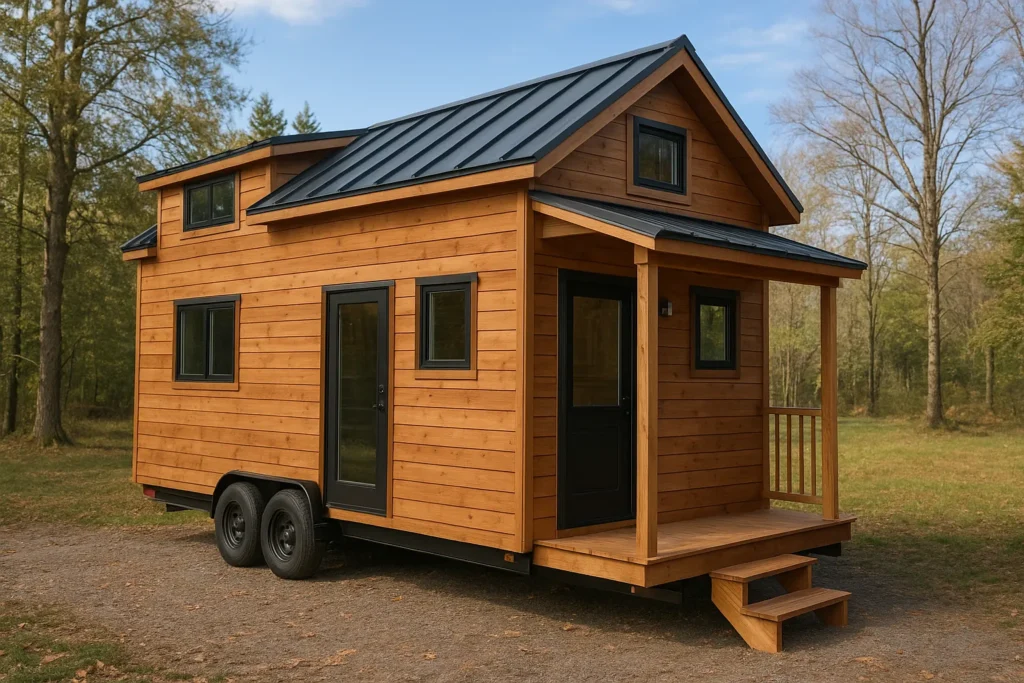
A tiny house is typically defined as a compact home, often between 15–40 m², designed to maximize functionality in a small footprint. These homes have grown into a cultural movement, supported by people who value minimalism, mobility, and eco-conscious living.
Most tiny houses are placed on trailers, allowing owners to move easily from one location to another. This mobility has made them especially popular in the United States and Europe, where zoning laws and flexible regulations encourage small-scale housing experiments. According to the Tiny House Association (2023), the movement has expanded by nearly 200% in the last decade, showing that interest in downsizing is more than just a passing trend.
Advantages of Tiny Houses:
-
Affordable compared to traditional homes
-
Freedom to travel and live in different places
-
Lower environmental footprint
-
Encourages a minimalist, clutter-free lifestyle
Disadvantages of Tiny Houses:
-
Very limited storage and living space
-
Not practical for large families
-
Local legal restrictions may apply
-
Seasonal comfort can be challenging
What Is a Modular Cabin?
A modular cabin is a prefabricated home constructed in sections (modules) within a factory and later assembled on-site. Unlike tiny houses, modular cabins are usually larger, more permanent, and customizable. Sizes range from 30 m² to over 120 m², depending on the design.
Research by the Modular Building Institute (2024) shows that modular construction can reduce building time by up to 50% compared to traditional methods. Since modules are manufactured in controlled environments, the process ensures better quality control, lower waste, and higher energy efficiency.
Advantages of Modular Cabins:
-
Larger and more flexible layouts
-
Suitable for families or long-term living
-
Durable materials and modern insulation systems
-
Customizable designs with multiple floor plans
Disadvantages of Modular Cabins:
-
Less mobile than tiny houses
-
Higher upfront investment
-
Requires a permanent foundation or land
Lifestyle Considerations: Which One Fits You?
The decision between a tiny house and a modular cabin largely depends on your personal goals, lifestyle preferences, and long-term vision.
If you value freedom, simplicity, and mobility: a tiny house may be your ideal choice. You can move across regions, reduce expenses, and embrace a minimalist lifestyle while still enjoying the essentials of a home.
If you prefer comfort, stability, and space: a modular cabin provides a better long-term solution. With room for families, guest areas, and customization, modular cabins are closer to traditional homes while maintaining cost-efficiency.
Cost Comparison
While tiny houses are more affordable at first glance, modular cabins often provide better value per square meter. For example, a 20 m² tiny house may cost less to build, but a 60 m² modular cabin often comes with better insulation, utilities, and structural integrity.
Furthermore, financing options differ. Banks and lenders may hesitate to provide loans for tiny houses due to mobility and zoning concerns, whereas modular cabins are often treated more like conventional homes, making financing easier.
Environmental Impact
Both options support sustainability, but in different ways. Tiny houses minimize resource use and encourage off-grid living with solar panels and composting toilets. Modular cabins, on the other hand, reduce construction waste and can be built with eco-certified materials. If environmental impact is a priority, both are excellent choices, though the cabin offers more comfort without sacrificing efficiency.
Conclusion
Tiny houses and modular cabins both represent a modern evolution in housing. The tiny house is perfect for those who dream of a mobile, minimalist lifestyle, while the modular cabin is ideal for people seeking a more permanent and spacious home with customization options.
Ultimately, the right choice depends on whether you prioritize mobility and affordability or comfort and long-term stability. By carefully considering your goals, budget, and lifestyle, you can decide which housing type best suits your future.
Get in touch with us today for more information.